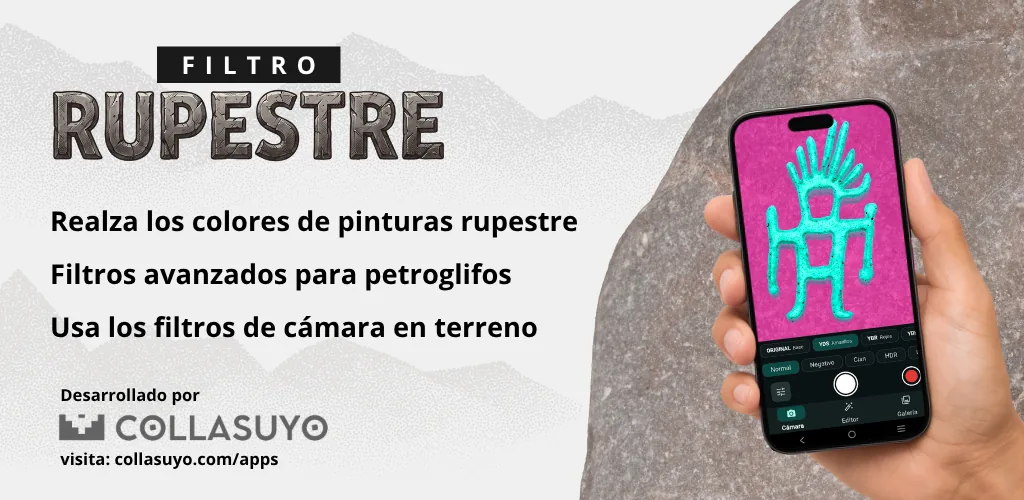
Camera filters in the field
The filter is applied live as you frame the panel. Adjust brightness, contrast and intensity, then shoot the moment the figure appears.
Filtro Rupestre applies colour decorrelation to reveal faded rock paintings that are barely visible to the naked eye. It also works on some kinds of petroglyphs.
A field tool for archaeologists, guides, researchers and enthusiasts who document ancestral art.
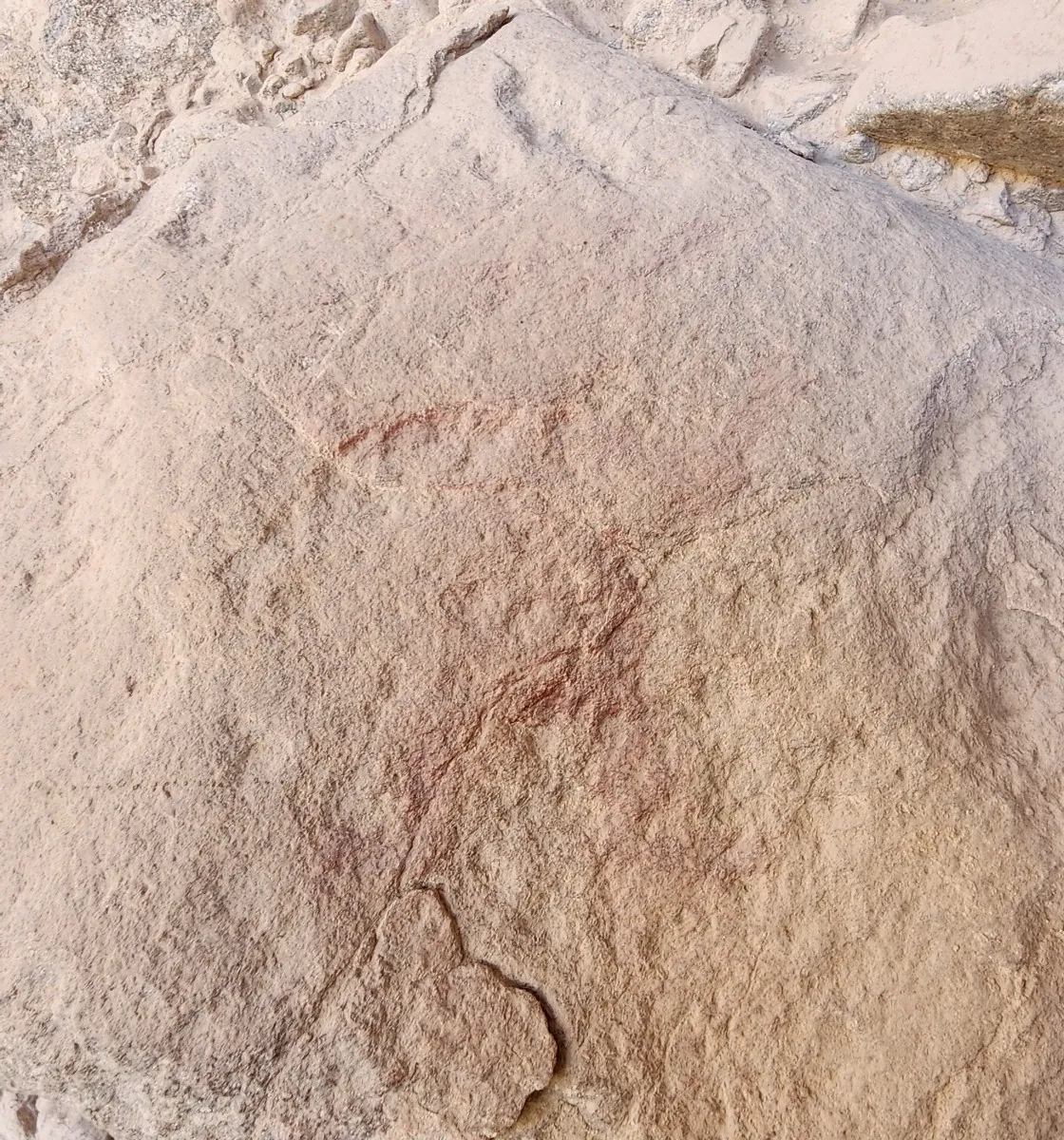
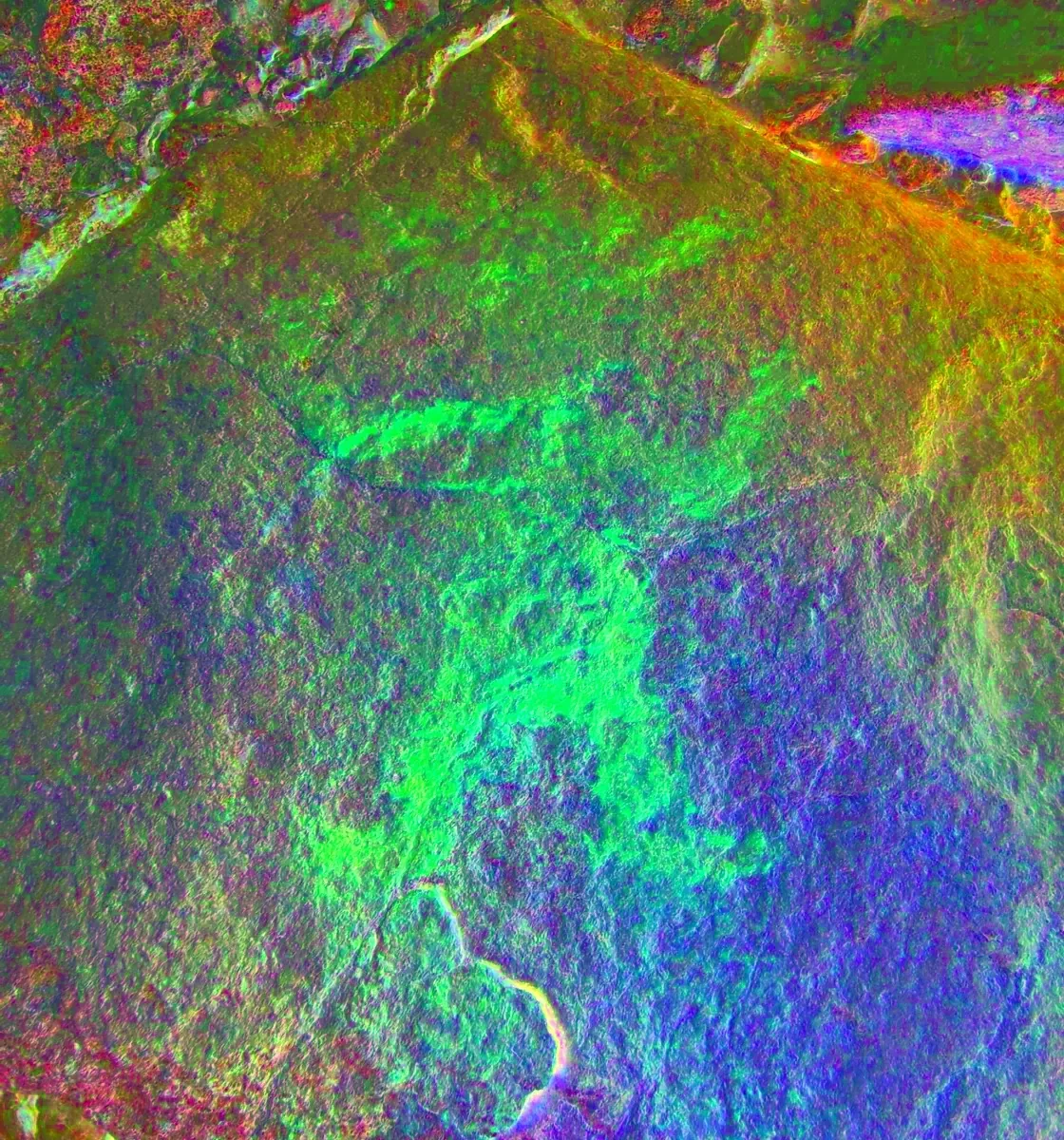 Original
Decorrelation
Original
Decorrelation
Drag across the image to compare the original photo with the processed one.
The algorithm mathematically decorrelates the colour channels of the photograph and amplifies the nearly imperceptible differences between very similar tones, especially pigments such as haematite, red ochre and charcoal blacks.
It is an image-processing technique born in NASA / JPL multispectral analysis. In archaeology it became widely known through DStretch, the ImageJ plugin created by Jon Harman, and today it is a standard tool in rock art studies. Filtro Rupestre brings that same principle to your phone camera.
To work in real time, the app splits the job: about four times per second it analyses a downscaled version of the image to compute the colour statistics, and the phone's graphics processor applies that transformation to every camera frame. The editor uses exactly the same process, so what you see on screen is what gets saved.
The result: pictographs, strokes and figures worn away by erosion become visible again. Without touching the rock. Without altering the site. Just your phone camera.
The filter is applied live as you frame the panel. Adjust brightness, contrast and intensity, then shoot the moment the figure appears.
Six decorrelation modes (YDS, YBR, YBK, LAB, LDS and LRE) separate the pigment from the rock surface and intensify it.
Expert filters such as histogram equalisation, high pass and emboss bring out shallow carvings that flat light hides.
Open photos from your gallery, crop them, rotate them and stack filters with “Bake filter” to keep working on the result.
Processed photos are collected in the app's own gallery, ready to save or share once you are back from the field.
Share the before and after of your filters on the Muro Rupestre, a space where the community comments on and shares their records.
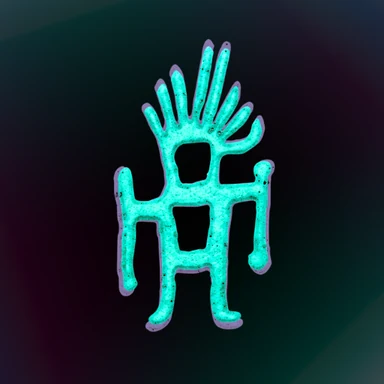
Available in 11 languages
The app and this page are available in Spanish, English, Portuguese, French, Italian, German, Russian, Chinese, Japanese, Arabic and Hindi.
Version 1.0 demo: the live camera with decorrelation filters, the editor with advanced filters and the Muro Rupestre.
DStretch is the name commonly given to decorrelation stretch applied to rock art. It became widely known through the ImageJ plugin created by Jon Harman: it rearranges the colour channels of a photo to exaggerate minimal differences in tone, making visible pigments the eye can barely distinguish.
No. Filtro Rupestre is an independent app developed by Collasuyo that applies the same decorrelation principle, with colour modes such as YDS, YBR, YBK, LAB, LDS and LRE. It is not affiliated with DStretch or its author.
Yes. Filtro Rupestre applies decorrelation in real time on the phone camera, so you see the enhanced pictograph while framing and can take the photo right then. You can also process photos you already took, in the editor.
Decorrelation mainly brings out pigments, that is, paintings or pictographs. For petroglyphs, which are carvings without colour, the editor includes expert filters such as histogram equalisation, high pass and emboss, which bring out the grooves.
It is a space inside the app where users share the before and after of their captures and comment on records from the community.
Filtro Rupestre is available in 11 languages: Spanish, English, Portuguese, French, Italian, German, Russian, Chinese, Japanese, Arabic and Hindi.
Filtro Rupestre is downloaded from Google Play. In Chile it costs CLP 4,000; in other countries Google Play shows the price in your own currency.
Available for Android phones on Google Play, in 11 languages.